
Backtesting vs Paper Trading: Which Gets You Profitable Faster?

Sofia IvanovaHead of Customer Success
Key takeaways
- Backtest first, paper trade second: backtesting is the filter, paper trading is the rehearsal, live trading is the exam.
- Backtesting compresses time — bar replay lets you build 100-300+ trade samples in days instead of months.
- Paper trading tests what backtesting can't: live spreads, waiting, execution and emotions at market speed.
- Neither reproduces the psychology of risking real money — go live small (around 1% risk) when both stages pass.
- Paper trading alone is too slow to build meaningful samples, and it's easy to cheat yourself.
Backtesting first. Paper trading second. That is the useful answer to backtesting vs paper trading.
Backtesting lets you test an idea across a large sample of historical trades quickly. You can find out whether the strategy has any evidence behind it before you spend weeks waiting for setups — or actual money discovering that your "edge" was three lucky trades and a nice-looking chart.
Then you paper trade the strategies that survive.
Paper trading, also called demo trading, tests something different: whether you can actually execute the strategy as the market unfolds. You have to wait, follow the rules in real time and deal with the fact that the next candle stubbornly refuses to arrive early because you are bored.
You need both. Just not at the same time, and not in the wrong order.
The short answer
If your goal is to get to a genuinely tested trading strategy faster, the order is simple: backtest first. Forward test second. Trade live last.
Backtesting answers: does this strategy have evidence of an edge across enough trades to justify further testing?
Paper trading answers: can I execute this strategy properly under live market conditions?
Those are different questions.
Start with backtesting because it compresses time. Instead of waiting months for enough setups to appear, you can work through historical price action using bar replay and build a meaningful sample much faster.
Bad ideas get killed cheaply. Promising ideas move forward.
Then you paper trade those survivors on a demo account. Now you are testing patience, execution, live spreads and slippage, changing market conditions and your ability to follow the plan when you cannot skip ahead to the next candle.
Think of backtesting as the filter. Paper trading is the rehearsal. Live trading is where money finally enters the equation.
What backtesting does best
The biggest advantage of backtesting is speed. Markets only give you one new minute every minute. Historical data is considerably more cooperative.
With bar replay backtesting, you can move through historical charts candle by candle without seeing what happens next. That lets you simulate the decision-making process while covering far more market history than you could by waiting for live setups.
A strategy that produces three valid setups per week would take months to generate a decent sample through paper trading. Backtesting lets you compress that process.
That matters because small samples lie. You can take ten trades, win seven and convince yourself you have discovered the forex equivalent of electricity. Another 100 trades may tell a very different story.
A larger backtest gives you more information about:
- Win rate.
- Average winner and loser.
- Losing streaks.
- Drawdowns.
- Performance in different market conditions.
- Whether your entry and exit rules are actually objective.
- Whether the strategy still makes sense after dozens or hundreds of trades.
More importantly, backtesting lets you reject bad ideas before they cost real money.
Suppose you think a breakout setup works brilliantly on GBP/USD. Rather than trading it live for three months, you can define the rules and test them across historical data. If the results fall apart over a larger sample, good. You have learned something without paying tuition to the market.
With Traders Casa, the free plan gives you unlimited backtest sessions, six months of historical data, a P&L graph and consistency tracker with no card required. Basic extends the historical data to six years, while Pro gives you 20+ years. All plans use one-minute data, with TradingView-powered charts and bar replay backtesting.
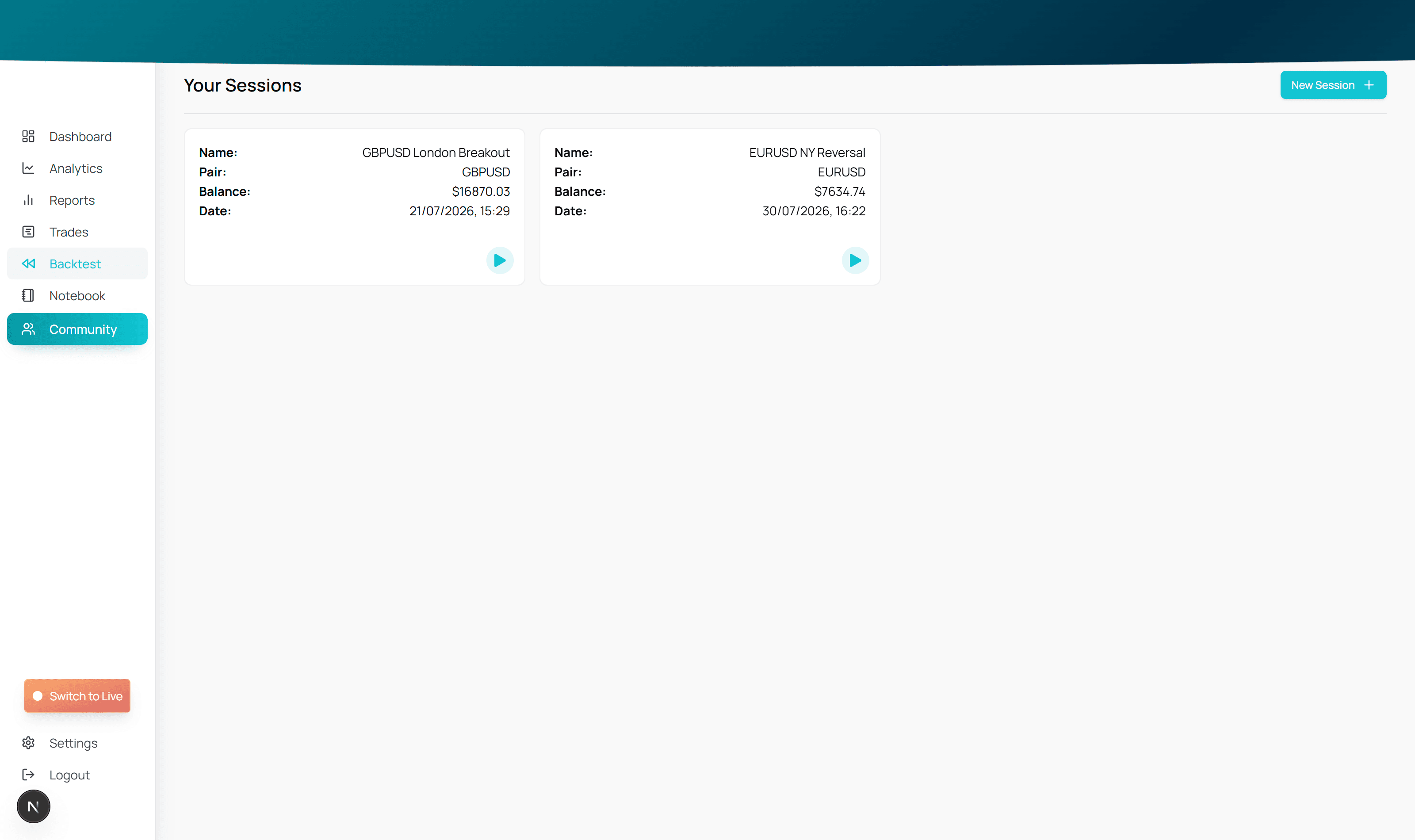
The goal is not to make the backtest look good. It is to find out whether the strategy deserves another test.
What paper trading does best
Paper trading slows everything back down. That is exactly why you need it.
Once a strategy has survived historical testing, you want to see what happens when you cannot jump forward through the boring bits.
A demo account forces you to experience the market at market speed. You place the trade. Then you wait.
Maybe the setup takes four hours to complete. Maybe nothing happens all day. Maybe you watch price get within a fraction of your entry before reversing and disappearing. That waiting is part of trading.
Paper trading also brings execution closer to the environment you will face live. You can see how spreads behave, encounter slippage in the trading environment and practise getting orders entered correctly rather than simply recording theoretical entries on historical charts.
It also tests whether your rules are practical. "Enter on confirmation" might sound perfectly clear in a strategy document. Then the live candle appears. Confirmation of what, exactly?
If you keep hesitating, changing your interpretation or entering late, you have found an execution problem that a clean historical backtest may not expose.
Paper trading also introduces some of the emotional friction of waiting for an uncertain outcome. You will get bored. You will want to take mediocre setups. You will see price move without you and feel tempted to chase it.
That makes demo trading useful preparation. It is still not the same as risking real money, but it is a much better test of your execution than clicking rapidly through hundreds of historical candles.
What each one misses
Neither method gives you the complete picture.
Backtesting has one obvious weakness: you already know you are testing historical data. Even with bar replay hiding future candles, you control the pace. You can stop. Speed up. Take a break. Review something. Reset. Real-time pressure is different.
Backtesting also cannot perfectly recreate every piece of execution friction you may encounter when placing trades in a live market. That is why a strong backtest is evidence to continue testing — not permission to assume future profits are guaranteed.
Paper trading has the opposite problem. It is realistic in time, but painfully slow for building samples. If your strategy only creates a handful of setups each week, reaching 100 trades could take months. Testing several strategy variations this way becomes impractical very quickly.
There is another problem: demo money does not feel like money. A £500 demo loss is a number on a screen. A £500 real loss may suddenly inspire you to rewrite your trading plan halfway through the trade.
Paper trading can expose impatience, boredom and execution mistakes, but it cannot fully recreate the psychological pressure of risking capital you actually care about.
It is also easy to cheat yourself. Missed the entry? "Close enough." Entered before confirmation? "I would have waited with real money." Moved the stop? "That was just for testing."
Do that often enough and you are no longer forward testing your strategy. You are forward testing your ability to invent excuses.
The right order
Use each method for the job it is good at.
Start by turning your strategy into objective rules. "Buy when it looks strong" is not a strategy. Define the market, timeframe, setup, entry trigger, stop placement, target, invalidation rules and anything else you need to make the same decision repeatedly.
Then backtest it. A useful target is 100-300+ honest trades before drawing strong conclusions.
The word "honest" matters more than the number. Do not skip losing setups. Do not move entries because you can see what happened next. Do not quietly change the rules after trade 37 and count the first 36 as though you had always traded the new version. If you change the strategy materially, you are testing a different strategy.
Once you have a large enough sample and the results are worth investigating further, move to forward testing on a demo account. Trade the same written rules for weeks to months.
Now you are looking for different problems:
- Can you identify the setups in real time?
- Can you execute them consistently?
- Can you wait?
- Do the results remain reasonably consistent with what your backtest led you to expect?
- Are there practical issues you missed during historical testing?
Keep journalling the trades so you can compare what you planned to do with what you actually did.
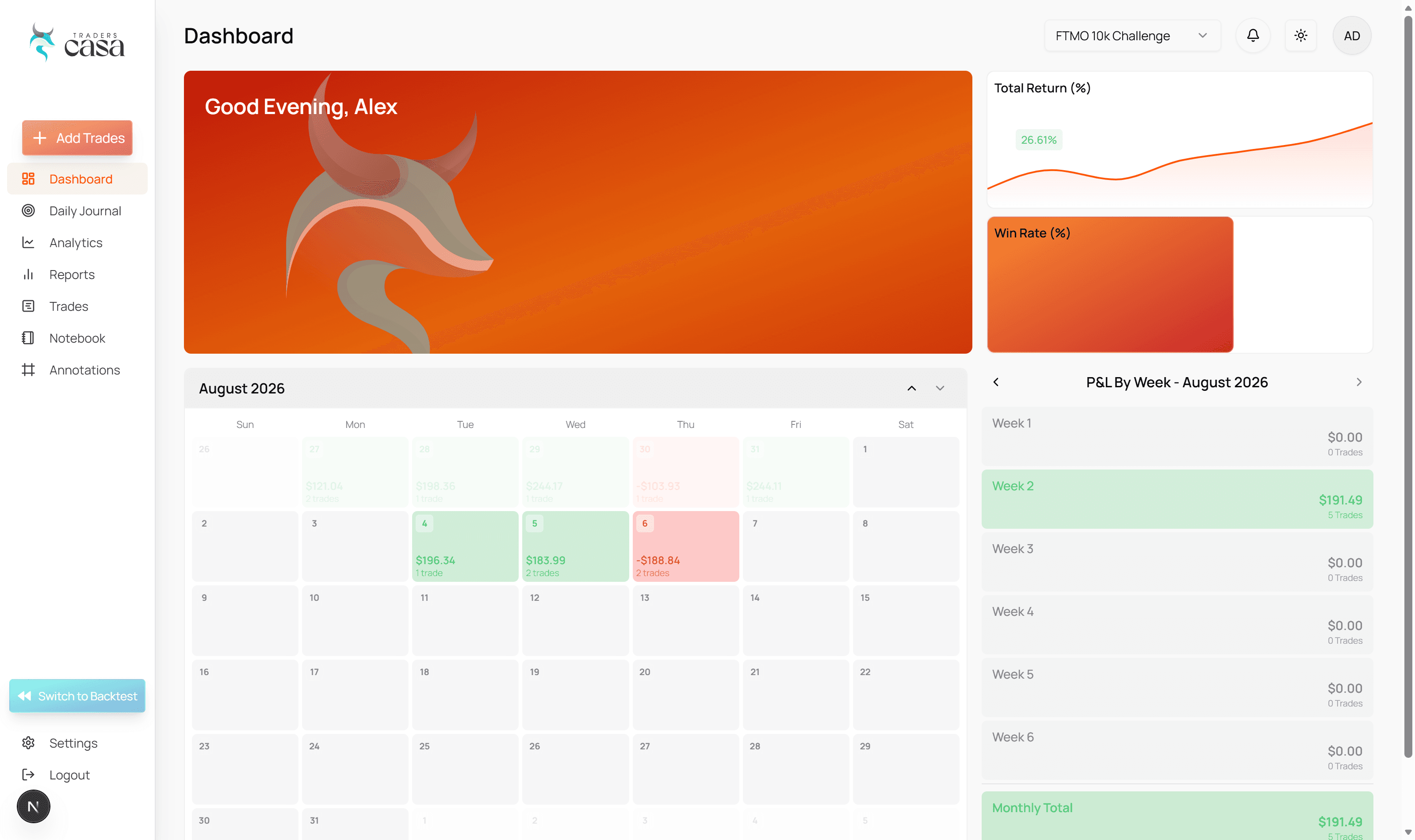
If the strategy survives both stages, the next step is not suddenly betting the house because your spreadsheet looks attractive. Go live small.
A common approach is to risk around 1% of your account per trade, while recognising that the appropriate level depends on your strategy, drawdown tolerance and personal circumstances. Real money introduces a psychological variable that neither backtesting nor demo trading can fully reproduce.
Keep the process boring. That is usually a compliment in trading.
We also have a full backtesting guide if you want to go deeper into building a proper historical test from start to finish.
Side-by-side
- Speed: Backtesting is much faster because you can replay historical markets instead of waiting for new candles to form; paper trading runs at live market speed.
- Sample size: Backtesting makes it practical to build hundreds of trades; paper trading can take weeks or months to generate a comparable sample.
- Realism: Paper trading is closer to live execution and current market conditions; backtesting sacrifices some realism for speed and control.
- Emotions: Backtesting creates limited emotional pressure, while paper trading tests patience, boredom and uncertainty — although neither fully recreates risking real money.
- Cost: Both can be done without risking trading capital; Traders Casa's free plan includes unlimited backtest sessions with no card required.
FAQ
Should I backtest or paper trade first?
Backtest first. You want to establish whether the strategy is worth spending weeks or months forward testing before you start waiting for live setups. Once it has survived a large, honest historical sample, paper trade it to test execution and real-time behaviour.
How long should I paper trade?
Think in weeks to months rather than a fixed number of days. You need enough time to see the strategy operate across different live conditions and enough trades to judge whether you can execute its rules consistently. Do not stop simply because you had a profitable week.
Can I skip backtesting?
You can, but you make the testing process much slower. Without backtesting, you may spend months paper trading an idea that a large historical sample could have rejected much sooner. Backtesting is the fast filter; paper trading is the live rehearsal.
Quick Recap
- Backtest first: use historical data to test your rules quickly and build a large sample.
- Aim for 100-300+ honest backtested trades before making strong conclusions.
- Kill weak strategies during backtesting, before they cost you real money.
- Paper trade the survivors: test execution, patience and the strategy under live market conditions.
- Paper trading is more realistic, but much slower for generating a meaningful sample.
- Neither method fully reproduces the psychology of risking real money.
- The sensible progression is backtesting, then forward testing on demo, then small live positions.
- When you eventually go live, keep risk controlled rather than assuming a good backtest guarantees future profits.
Backtesting tells you whether the strategy deserves a chance. Paper trading tells you whether you can actually trade it.
Run the filter stage free: unlimited backtest sessions with bar replay on TradingView-powered charts, then journal your live trades in the same place when you're ready.
Start backtesting free