
FTMO simulator
FTMO backtesting: test your strategy against the real rules
FTMO backtesting shows whether your strategy can survive the rules, not just make money. Pick 2-Step or 1-Step, enter your trading stats and run 5,000 attempts to see your FTMO pass rate, likely failures and best risk per trade.
- Challenge and Verification simulated
- 2-Step
- Trailing max loss and Best Day Rule
- 1-Step
- Simulated attempts with every change
- 5,000
- No email, account or install
- Free
FTMO challenge simulator
1The challenge
Account size
- Challenge target
- 10% · $10,000
- Verification target
- 5% · $5,000
- Max daily lossFrom the day's opening balance
- 5% · $5,000
- Max lossFixed below the starting balance
- 10% · $10,000
- Minimum trading days
- 4
- Time limit
- None
FTMO's published objectives, checked 28 September 2026.
2Your trading
The share of your trades that win.
A winner makes 1.5 times what you risk. Losers lose 1R.
Share of the starting balance you lose when a trade hits its stop.
Daily stop
Stop trading for the day after this many losses.
3Your odds
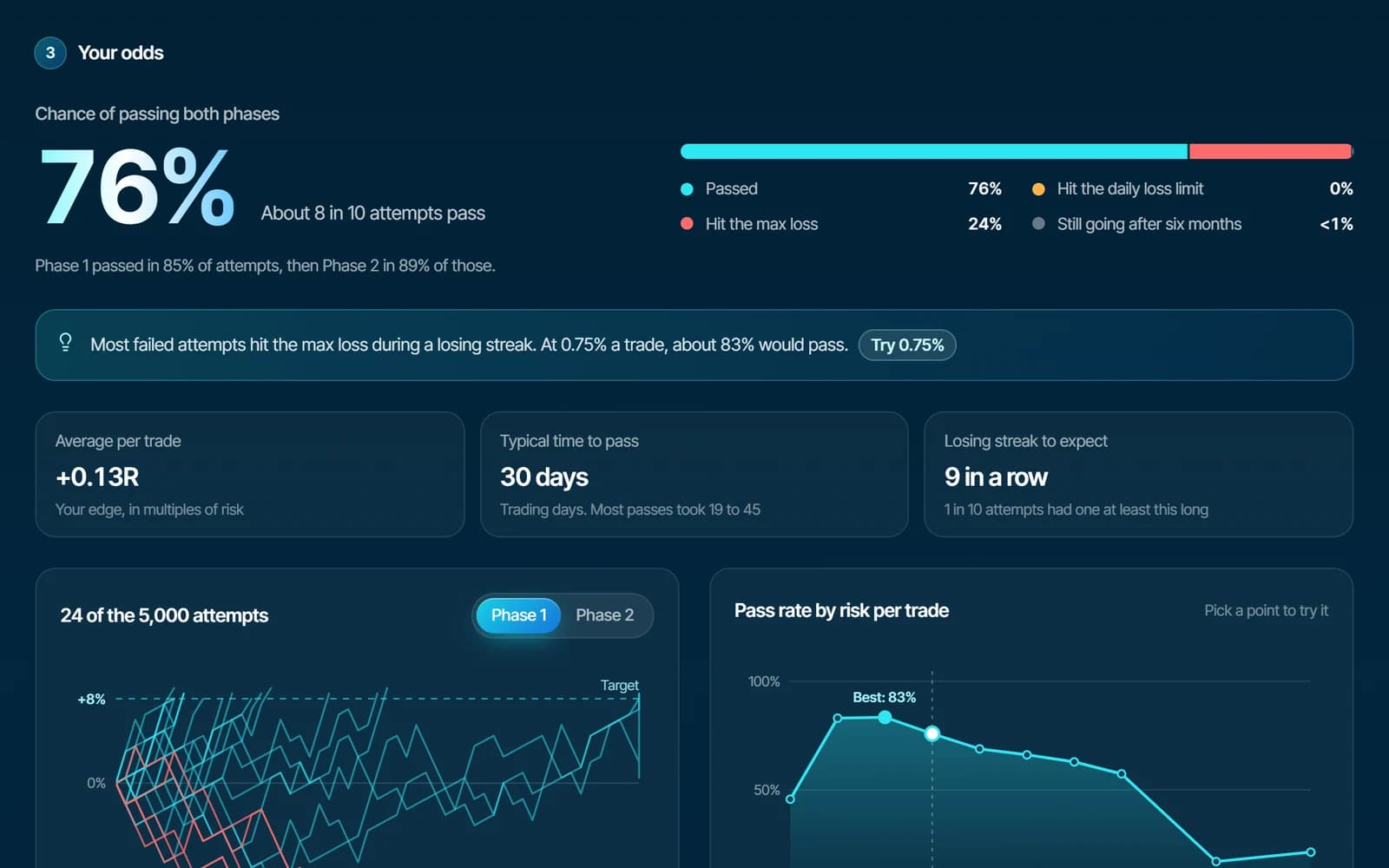
Chance of passing both phases
74%
About 7 in 10 attempts pass
Challenge passed in 84% of attempts, then Verification in 88% of those.
- Passed74%
- Hit the daily loss limit0%
- Hit the max loss26%
- Still going after six months1%
Average per trade
+0.13R
Your edge, in multiples of risk
Typical time to pass
35 days
Trading days. Most passes took 23 to 53
Losing streak to expect
9 in a row
1 in 10 attempts had one at least this long
24 of the 5,000 attempts
Trading days
Pass rate by risk per trade
Pick a point to try itRisk per trade
5,000 simulated attempts from your numbers. Trades are taken one at a time and limits are checked as each one closes, while FTMO also counts open losses, so leave a buffer. A guide, not a promise.
FTMO rules at a glance
As published on FTMO's Trading Objectives page, checked 28 September 2026.
| Rule | 2-Step | 1-Step |
|---|---|---|
| Profit target | 10%, then 5% in Verification | 10% |
| Max daily loss | 5% of initial capital | 3% of initial capital |
| Max loss | 10%, static | 10%, trailing your highest end-of-day balance |
| Minimum trading days | 4 in each phase | None |
| Best Day Rule | None | Best day at most 50% of your profitable days' total |
| Time limit | None | None |
2-Step
- Profit target
- 10%, then 5% in Verification
- Max daily loss
- 5% of initial capital
- Max loss
- 10%, static
- Minimum trading days
- 4 in each phase
- Best Day Rule
- None
- Time limit
- None
1-Step
- Profit target
- 10%
- Max daily loss
- 3% of initial capital
- Max loss
- 10%, trailing your highest end-of-day balance
- Minimum trading days
- None
- Best Day Rule
- Best day at most 50% of your profitable days' total
- Time limit
- None
Daily limits start from the day's opening balance and include open losses. FTMO can change its rules, so check ftmo.com before relying on them.
What actually fails FTMO challenges
The target is only half the job. You have to survive the limits too.
Three losses in 1-Step
At 1% risk, three losses in one day use the full 3% daily limit.
Open losses count
A trade can use the daily loss allowance before it closes if it moves against you.
The max loss trails
On 1-Step, it follows your highest end-of-day balance and never moves back down.
The Best Day Rule
One big 1-Step day does not fail you. You keep trading until it falls below half.
Backtest your strategy for FTMO
Get real trade results first. Then test how they survive the FTMO rules.
Choose the challenge
Pick 2-Step or 1-Step first. The rules and limits are different.
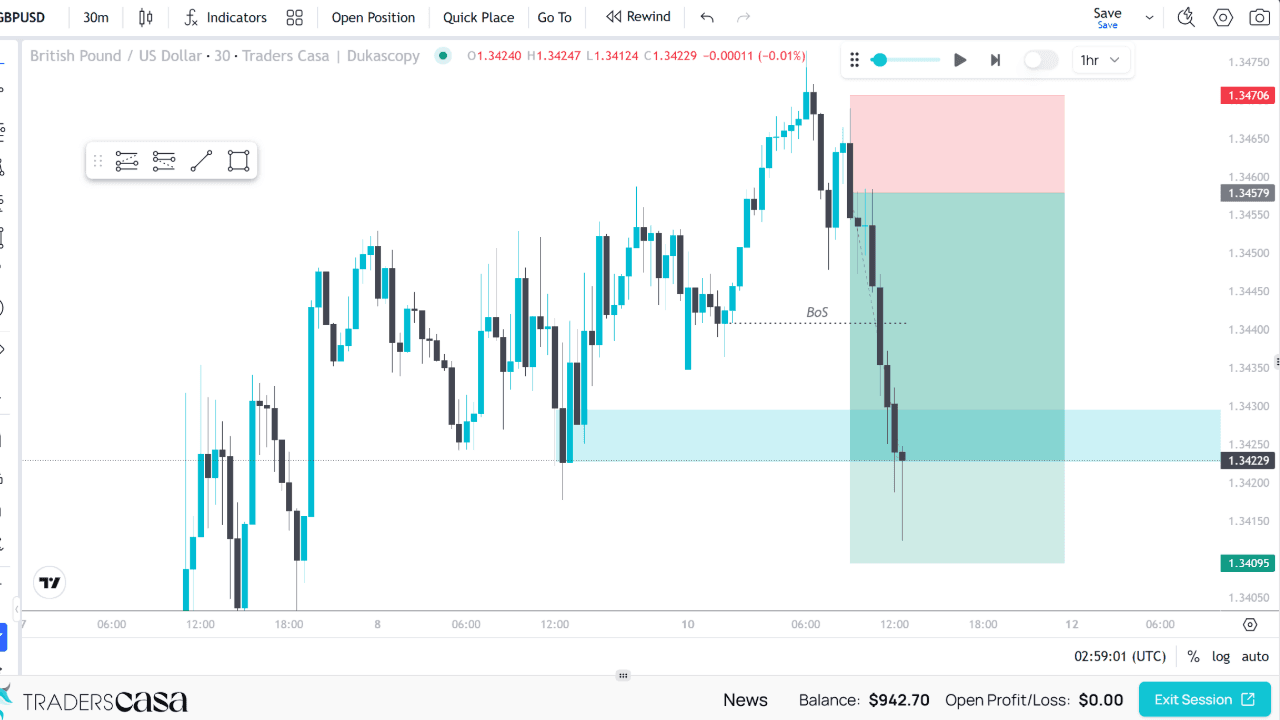
Replay without peeking
Backtest bar by bar and take every valid setup at your normal risk.
Log trades in R
Record each result as an R multiple so the simulator can reshuffle your actual trades.
Run the simulator
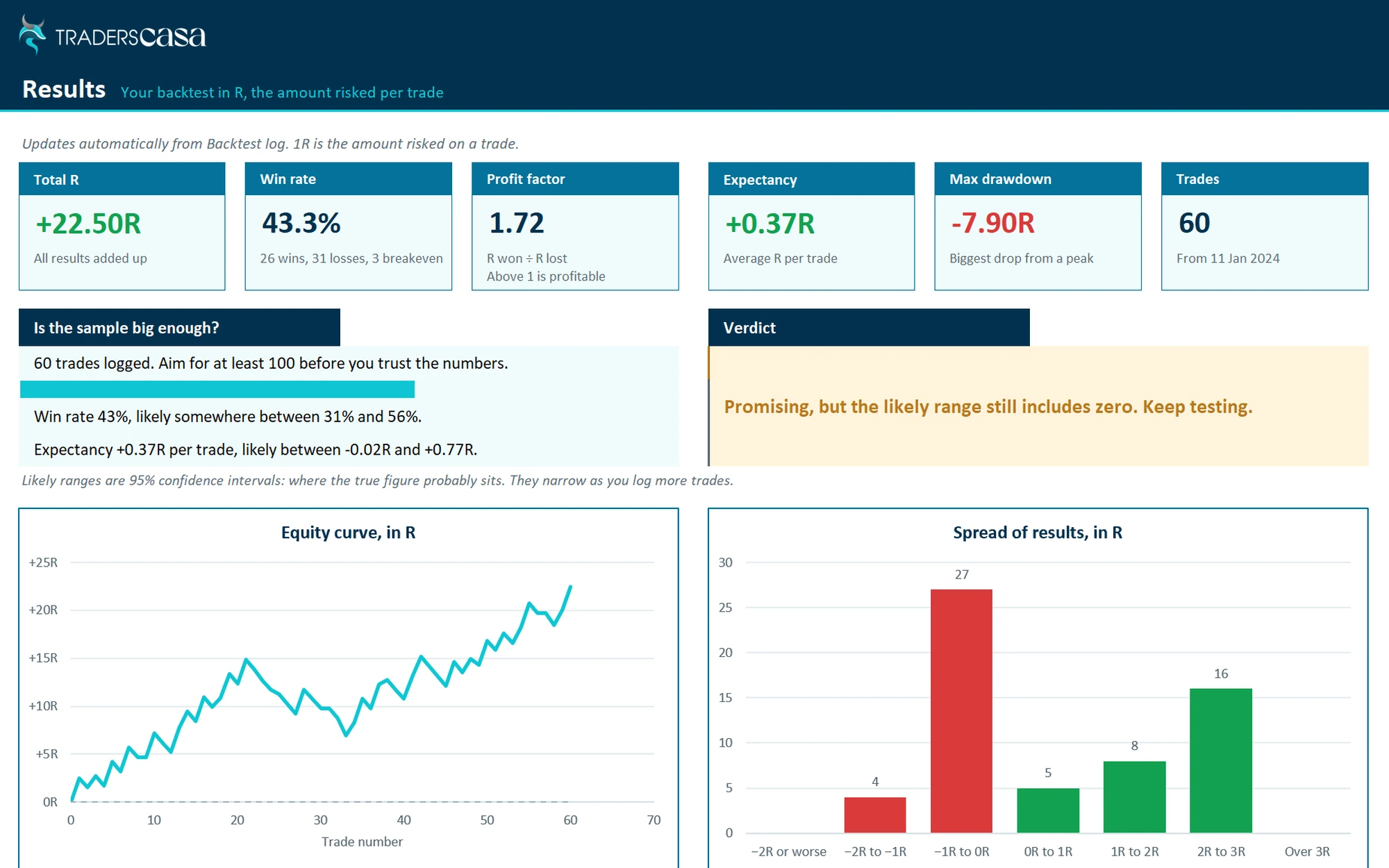
Paste your results, compare pass rates and see how different risk levels survive the rules.
Questions, answered
Can you backtest an FTMO challenge?
Yes. Backtest your strategy on historical charts, then test those results against the FTMO rules. The FTMO challenge simulator on this page runs 5,000 attempts, reshuffling your trades to show how often the same edge could pass or fail.
Is the FTMO daily loss based on balance or equity?
The daily limit starts from your balance at the beginning of the day, but open losses count towards it. That means a trade moving against you can breach the daily limit before the trade closes.
What risk per trade is best for FTMO?
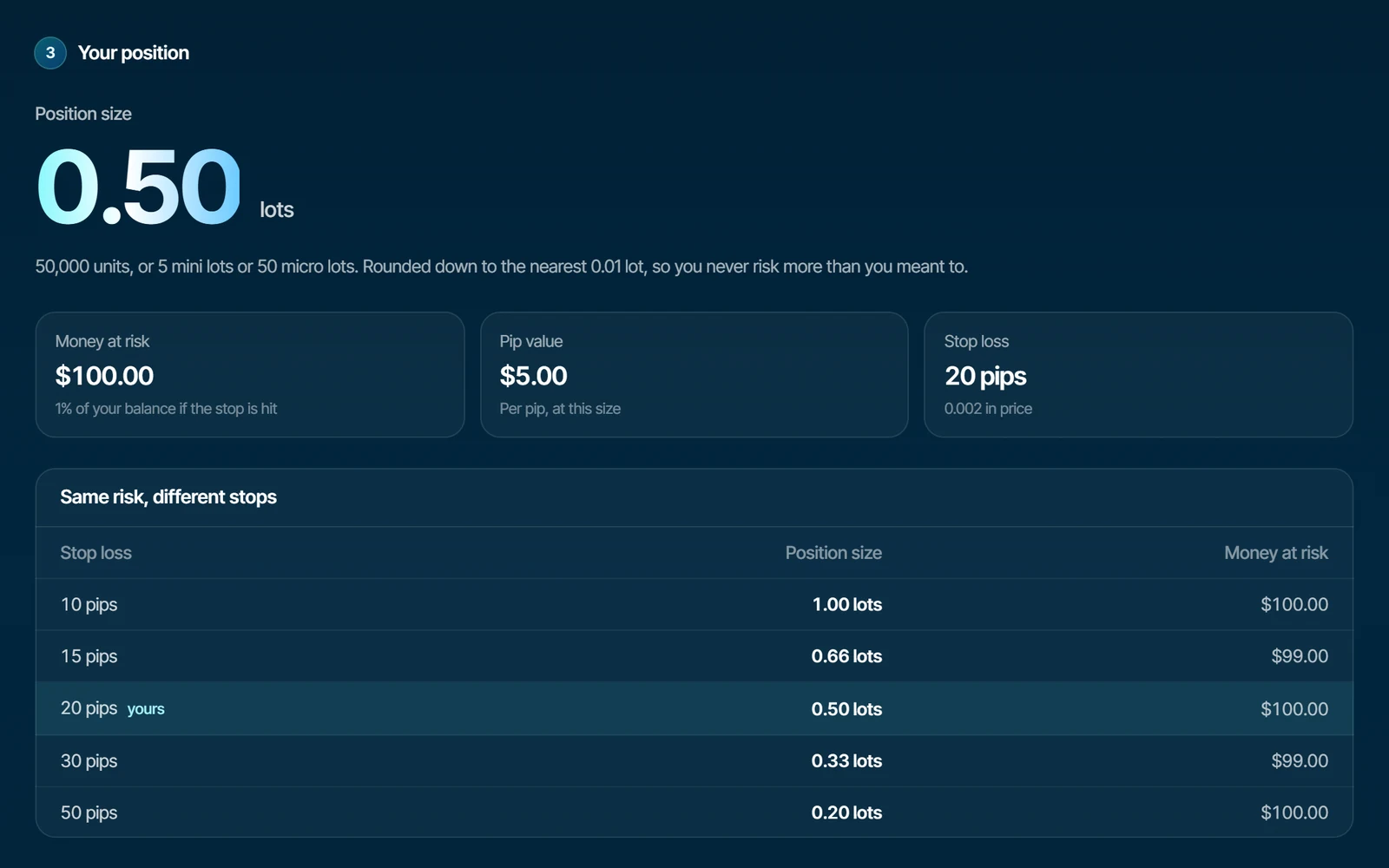
There is no single best risk for every strategy. Your win rate, average win and trading frequency all matter. The simulator compares FTMO pass rate by risk. On 1-Step, three 1% losses in one day use the full 3% daily limit.
Does passing the simulator mean I will pass FTMO?
No. The simulator estimates your odds from the trading results or inputs you provide. Real trading can differ, and open losses count towards FTMO limits. Treat the result as a guide to your strategy and risk, not a promise.
Is Traders Casa affiliated with FTMO?
No. Traders Casa is not affiliated with or endorsed by FTMO. The simulator uses rules from FTMO's public Trading Objectives page, checked on 28 September 2026. Those rules can change, so check FTMO before relying on them.
More free tools
All free tools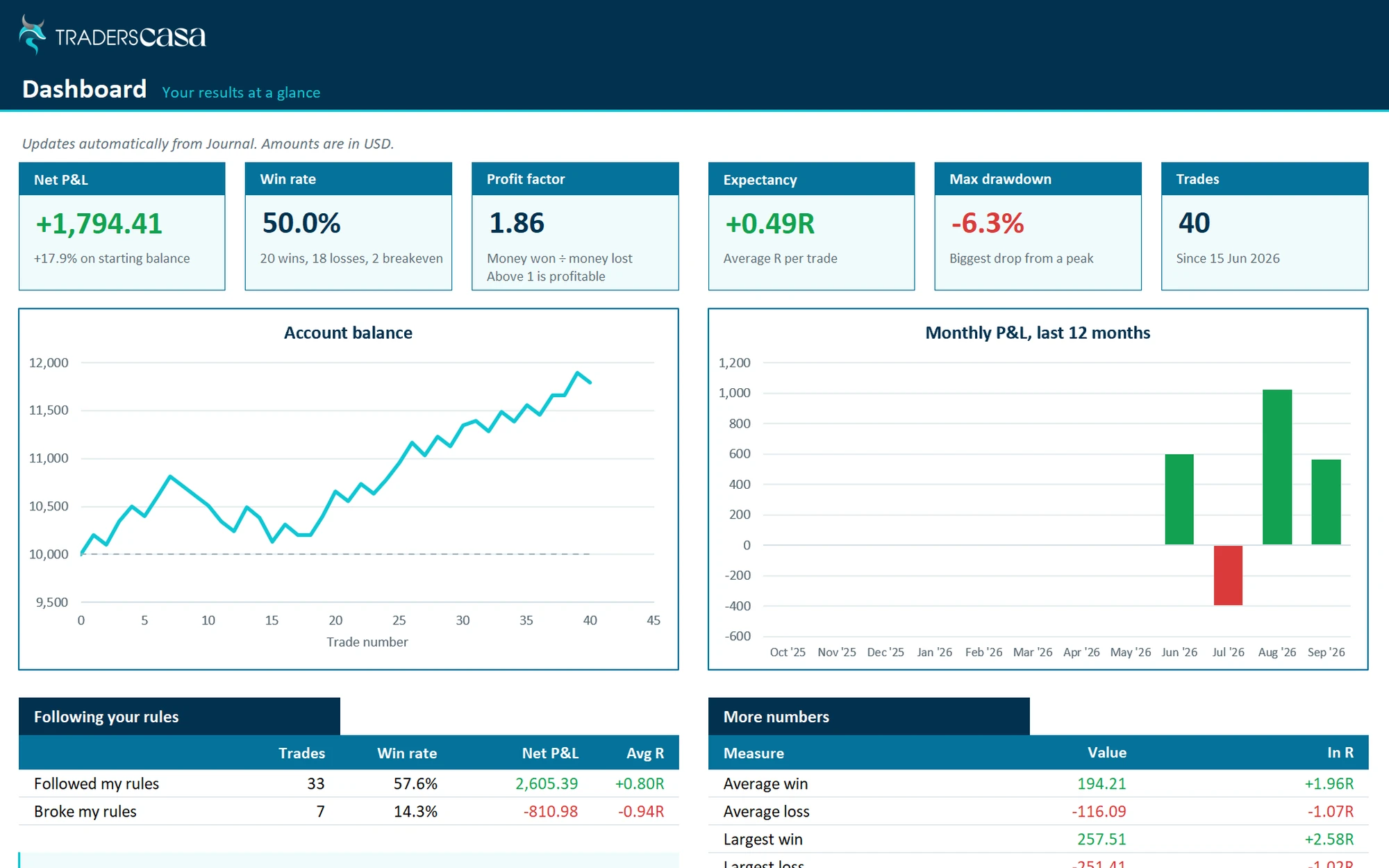

Test it before you pay
Backtest on TradingView powered charts, then run your results through the simulator. Unlimited sessions are included on the free plan.